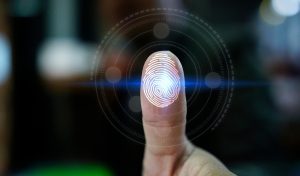
South Wales police in the United Kingdom recently apprehended a suspected drug dealer using nothing more than a partial picture of his hand and a bit of clever computer work. If anything, this should be a warning to offenders that technology is catching up with them.
The arrest came about after a suspected dealer, Elliot Morris, used WhatsApp to send a photograph of ecstasy tablets in his hand to a potential buyer.
Police had earlier executed a search warrant at a property in Kenfig Hill following suspicions of a gang supplying cannabis on a large scale in Bridgend. Five individuals were arrested during the operation. In due course officers were able to identify the gang’s up-stream suppliers as Morris’ parents, Darren and Dominique, which subsequently lead them to Morris himself.
Staff from the Joint Scientific Support Unit (JSIU) at South Wales Police were able to enhance a picture of a hand holding a number of tablets, allowing them to extract a partial fingerprint – enough to link Morris to the large scale supply of ecstasy in the area.
Morris was subsequently also identified as the leader of the cannabis operation.
Fingerprinting is Evolving

In 1892 Inspector Eduardo Alvarez made the first positive criminal fingerprint identification. It concerned a woman named Francisca Rojas who had murdered her own sons and cut her own throat in an attempt to incriminate another person. Since then, fingerprints have been considered to be an infallible method of identification.
The problem, however, is that until relatively recently fingerprinting was a subjective discipline, the outcomes of which could have been influenced by human error – even more so where partial prints are concerned. In 2017, however, scientists from the National Institute of Standards and Technology (NIST) and Michigan State University developed an algorithm that automates a key step in the fingerprint analysis process.
Said study co-author Elham Tabassi: “We know that when humans analyze a crime scene fingerprint, the process is inherently subjective. By reducing the human subjectivity, we can make fingerprint analysis more reliable and more efficient.”
The algorithm can help forensic officers determine how much useful information is available on a partial, smudged, or distorted fingerprint. In turn, this can help the officers determine whether enough information is available for further analysis, and subsequent matching with the Automated Fingerprint Identification System (AFIS).
Combined with the experience of the forensic officer, evolving technology can help identify individuals faster and with greater accuracy with an ever shrinking amount of visual information.